
The Subtle Map Error That Keeps Local Furniture Shoppers at Your Competitor’s Store
Imagine this: A high-intent shopper is standing in the heart of your city’s downtown district. They’ve just moved into a new home and are searching for a “mid-century modern sectional sofa.” They pull out their phone, open Google Maps, and perform a search. Your showroom is exactly two blocks away – a three-minute walk. Yet, the Google Map Pack displays a competitor located three miles across town as the #1 result. Your store is buried on page two, or worse, omitted entirely.
As a Google Business Profile Product Expert, I see this scenario play out daily. Furniture retailers often assume that physical proximity is the ultimate trump card in local search. In reality, proximity is only one-third of the equation. By 2026, the landscape of google business profile seo has evolved far beyond simply “having an address.” Today’s furniture buyers use search engines to compare dimensions, check real-time floor stock, and view virtual showroom previews before they ever turn a door handle. If your digital presence contains even one “subtle error,” Google’s algorithm will perceive your business as less relevant or less trustworthy than the shop down the street.
In this comprehensive guide, we will dissect the technical glitches, category missteps, and data inconsistencies that act as a “do not enter” sign for local shoppers. We will explore how to rank google business profile listings for maximum visibility and ensure your showroom is the first choice for every local buyer.
The “Subtle Error” Revealed: NAP Inconsistency & Pin Placement
The most common reason for a sudden drop in local visibility is what we call NAP inconsistency – discrepancies in your Name, Address, and Phone number across the web. While it may seem trivial to a human that your address is listed as “123 Main St. Suite 4” on your website and “123 Main Street #4” on a local directory, Google’s crawler sees these as two different data points. This creates a “trust gap.”
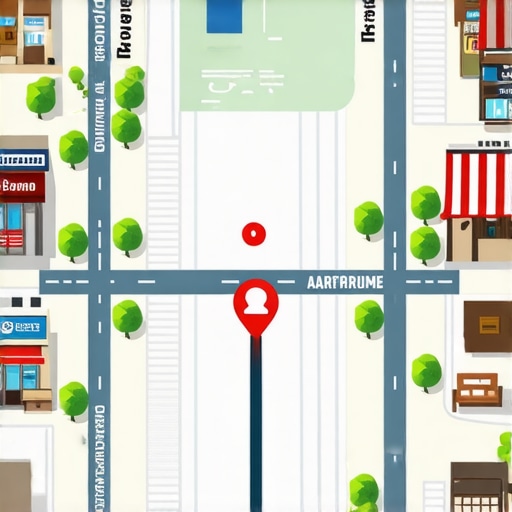
When Google’s algorithm attempts to verify your location, it looks for a consensus. If the data is fragmented, Google loses confidence in your location’s accuracy. This invisible to local buyers error is particularly damaging for furniture stores located in shopping centers or large industrial complexes. If your map pin is dropped at the entrance of a massive parking lot rather than at your actual front door, mobile shoppers using GPS may get frustrated and navigate to a competitor with a more precise pin placement.
Furthermore, a simple address error – such as a typo in your zip code or a missing suite number – can lead to “ghosting” in the local pack. To fix this, you must audit your citations. Every mention of your business on Yelp, Yellow Pages, and specialized furniture shop listings must be identical to the data on your Google Business Profile (GBP). Consistency tells Google that your business is a legitimate, high-authority entity.
Why Your Category Choice is Sabotaging Your Showroom
The “Subtle Map Error” often extends into the backend of your GBP dashboard – specifically your category selection. Most owners set their primary category to “Furniture Store” and stop there. While accurate, this is a missed opportunity for google business profile optimization.
Google allows for one primary category and up to nine secondary categories. If a shopper searches for “custom mattresses” or “ergonomic office chairs,” and you haven’t selected “Mattress Store” or “Office Furniture Store” as secondary categories, you are effectively invisible for those high-intent keywords. The algorithm prioritizes businesses that demonstrate specific relevance to the user’s query.
To identify which categories your top-ranking competitors are using, you should employ a professional google business profile audit tool. These tools reveal the hidden secondary categories that allow competitors to “hog” the map pack for niche searches. For a furniture retailer, adding categories like “Outdoor Furniture Store,” “Children’s Furniture Store,” or “Bedroom Furniture Store” can expand your reach by thousands of impressions per month. Engineering your profile for maximum relevance is the hallmark of a sophisticated google maps ranking service strategy.
Technical Local Signals: Schema and Map Embeds
Beyond the GBP dashboard, your website’s technical infrastructure plays a massive role in how Google perceives your physical location. This is where many furniture stores fall behind. To dominate the map pack, you must leverage local search signals through structured data, also known as Schema Markup.
Local Business Schema is a block of code that tells search engines exactly what you sell, where you are, and when you are open. For a furniture showroom, this schema should include your “Area Served,” your specific latitude and longitude, and even your holiday hours. When Google’s bots crawl your site and find this structured data, they can more easily sync your website authority with your Google Maps listing.
Another non-negotiable technical element is the Google Map embed on your “Contact” or “Locations” page. Don’t just paste a screenshot of a map; embed the actual interactive map from your GBP. This creates a direct link between your web traffic and your map entity. In the eyes of the algorithm, this reinforces your “geographic entity,” making you a more prominent candidate for the top three spots in the local pack. If you aren’t sure if your technical signals are firing correctly, using specialized local seo software can help you identify gaps in your code.
The Role of Visual Authority: Photos & 360° AR
In the furniture industry, aesthetics are everything. Google knows this. The algorithm now uses advanced image recognition (Google Vision AI) to “read” the photos you upload to your profile. If you upload a high-resolution photo of a leather sectional, Google identifies the object, the material, and the context. This contributes to your ranking for keywords like “leather sofas near me.”
By 2026, the standard for high-end furniture retailers has shifted toward 360-degree virtual tours and Augmented Reality (AR) previews. Shoppers want to “walk” through your showroom from their smartphone. Profiles that feature 360-degree views have a significantly higher “dwell time,” which is a powerful signal to Google that your listing is helpful to users.
Frequent photo updates are also essential. A stagnant profile suggests a stagnant business. Aim to upload new photos of floor model arrivals at least once a week. This activity signals to the algorithm that your business is active and providing fresh value to the community. This level of detail is a core component of modern local seo tools and strategies designed to maintain long-term rankings.
Reputation Management: More Than Just 5 Stars
We all know reviews are important, but most furniture store owners misunderstand *how* they influence the map pack. It isn’t just about your average star rating; it’s about “review velocity” and “keyword density.”
Google looks for specific keywords within user reviews to determine your relevance. If multiple customers leave reviews saying, “The best place for solid wood dining tables in [City Name],” Google will begin to rank you higher for those specific terms. This is why you should encourage customers to mention the specific pieces they purchased.
Furthermore, your response to reviews is a critical trust signal. A GBP Product Expert will tell you that responding to both positive and negative reviews with professional, keyword-rich language helps reinforce your map ranking signals. For example, instead of saying “Thanks for the review,” try “We are so glad you love your new Italian leather recliner! We take pride in being the top-rated furniture store in [City Name].” This simple tactic turns a testimonial into a powerful SEO asset.
Future-Proofing for 2026: The New Map Ranking Signals
As we look toward 2026, the frontier of local search is moving toward “Geographic Entity Reinforcement.” This means Google is looking for signals that your business is a pillar of the local community. This involves more than just your own profile; it involves how other local entities interact with you.
Are local interior designers linking to your showroom? Are you mentioned in local news articles or “Best of” lists? These external signals build your “Prominence,” the third pillar of the local algorithm (alongside Proximity and Relevance). To rank higher on google maps in this competitive environment, you must move beyond basic optimizations and start building a local digital ecosystem.
The integration of AI-driven “local keyword intent” means that Google can now predict what a shopper wants based on their search history and physical movement. If a shopper has been visiting home decor blogs and then searches for “showroom,” Google will prioritize furniture stores over car showrooms. Ensuring your profile is “engineered for maximum relevance” ensures you are the beneficiary of this AI-driven traffic. This is the future of gmb seo tools and strategy.
Conclusion: Reclaiming Your Local Market Share
The difference between a showroom full of shoppers and an empty floor often comes down to a few pixels on a map. A subtle address error, a missing category, or a lack of structured data can render your business invisible to the very people walking past your door.
To dominate the local map pack, you must treat your Google Business Profile with the same level of care as your physical storefront. Audit your NAP consistency, optimize your categories, and embrace the technical signals that Google’s algorithm craves. If you’re ready to stop losing sales to the competitor down the road, it’s time to take a data-driven approach to your local presence.
I recommend you perform a comprehensive audit of your current standing. To get started, you can visit the website of SEO Viper to explore their suite of local seo ranking tools. Their google maps rank tracker and audit capabilities can identify the subtle errors holding your furniture store back, allowing you to reclaim your rightful place at the top of the search results.