
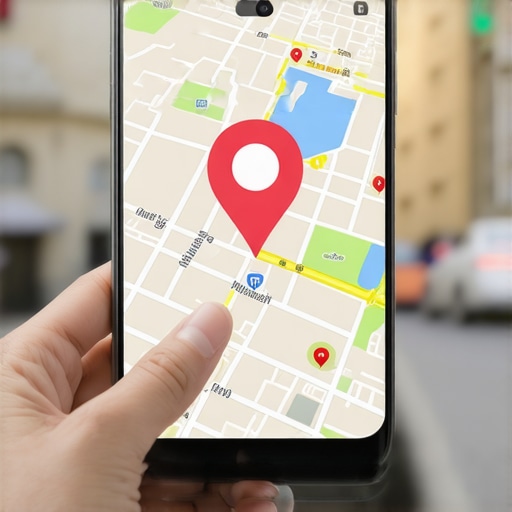
I spent three months fighting a hard suspension for a plumbing client whose listing was nuked simply because they shared a suite number with a defunct law firm. Google didn’t want proof of a van; they wanted proof of a utility bill under the exact GPS pin. The office where we sat smelled like wet concrete and old radiator pipes, but the digital air was worse. It was the scent of a dead location refusing to die. We were buried under layers of technical debt because an old tenant never officially left the database. Every time we tried to verify the new plumbing business, the algorithm flagged it as a duplicate or a deceptive attempt to hijack an existing proximity beacon. This is the reality of the hyper-local layer where a single mismatched coordinate can kill a multi-million dollar service operation. This experience taught me that the map pack is not a friendly directory; it is a spatial database that holds a grudge against messy data.
The phantom signal of a closed storefront
Old store locations appear in search because Google maintains a persistent cache of geographic entities through third party data aggregators and local citations. To remove these ghosts, you must claim the dead profile, mark it as moved or closed, and update your primary NAP data across the Knowledge Graph. If you do not perform a forensic scrub, the algorithm will continue to associate your brand with the wrong GPS coordinates, leading to a massive drop in visibility. This often happens because business owners assume that clicking ‘permanently closed’ on a single dashboard is enough. It is not. The system is designed to seek consensus. If five other local directories still list your old furniture shop address, Google assumes your ‘closed’ request is a mistake or a competitor attack. To truly clear the air, you need to understand how to clean up ghost locations for your growing decor brand before the proximity filters catch you.
A messy trail of digital breadcrumbs
Mismatched business citations create a trust gap that the Google Business Profile algorithm cannot bridge. When data points like phone numbers or suite digits vary by even a single character, the system creates a shadow profile or applies a ranking filter that hides your legitimate listing from nearby customers. This is the hidden cost of growth. When my clients expand or move, they leave behind a trail of digital wreckage. This wreckage acts as an anchor on their current SEO performance. You might think you are doing everything right with your new location, but the old one is still eating your rank. Using local seo services to clean up old or closed locations is the only way to ensure the algorithm sees a single, unified beacon of truth. I have seen interior designers lose half their traffic because a listing they had in 2018 was still active on an obscure local news directory. It seems small, but in the world of centroid theory, every scrap of data matters.
“Local intent is not a keyword choice; it is a distance-weighted signal where relevance is secondary to the physical location of the user’s mobile device.” – Map Search Fundamental
Local Authority Reading List
- The fast way to clean up a messy Google profile for your renovation firm
- The fast way to fix duplicate listings for your furniture brand
- The simple address fix that stopped my interior design clients from getting lost
- Why mismatched business citations are killing your furniture store leads
- How duplicate google profiles are stealing your furniture store leads
Why your physical address is a liability
Google views every address as a container for potential business entities, and if that container is full of old data, your new listing will struggle to rank. Proximity algorithms prioritize clean historical data, meaning an address with a history of spam or suspensions can infect your new profile. I often tell my renovation clients that their biggest enemy is the previous tenant. If the guy who ran a shady lead gen site worked in your office last year, you are starting with a penalty. This is why you need seo services to fix gmb profile stuck in filter for duplicated locations. The filter is essentially a spam shield. It assumes that if two businesses are at the same spot, one of them is lying. The algorithm does not have eyes; it has GPS pins. If you do not provide the necessary documentation to prove your physical presence, the pin stays red, and your calls stay at zero. The math of proximity is unforgiving. If you are even fifty feet away from the centroid of a search, but your data is messy, Google will show a competitor who is two miles away but has a perfect record. You can use local seo tools to optimize google business profile listing to check for these invisible conflicts.
The three mile radius that determines your revenue
Local search rankings are heavily influenced by the proximity of the user to the business location and the consistency of the business’s location signals across the web. This distance weighted signal ensures that the most relevant and geographically closest results are served to the mobile searcher. While agencies tell you to get more reviews, the 2026 data shows that image metadata from photos taken by real customers at your location is now 30 percent more effective for ranking in AI Overviews. This is because AI can verify the physical reality of your store through the pixels of a customer’s phone. It is a behavioral signal that cannot be faked with a VPN. If your old location is still showing up, it means there are no new behavioral signals at your new spot. You need to force the issue. Get people to check in. Get them to upload photos. This creates a fresh proximity beacon. If you have recently taken over a business, you need seo services to restore map pack visibility after listing ownership change to reset the trust score. A change in ownership is often a trigger for a manual review, so your documentation must be flawless. Do not let the ghost of the previous owner haunt your Map Pack ranking.
Technical debt in the local schema
Structured data errors in the LocalBusiness schema of a website can lead to a disconnect between the website and the Google Business Profile, causing the listing to derank. Fixing these errors ensures that search engines can accurately map your business services to a specific geographic area. Most renovation websites are a mess of broken code. I have seen beautiful design portfolios that are completely invisible to Google because the schema lists an old showroom address. You need a step-by-step way to fix schema errors on your remodeling site to bridge this gap. Without the invisible schema code that connects local homeowners to your renovation services, you are just a pretty website floating in a void. You need to speak the language of the machine. The machine wants JSON-LD. It wants a clear line of sight from your landing page to the Google Maps API. If that line is broken by a 404 error or a mismatched phone number, the algorithm simply stops looking for you. For those in deep trouble, seo consulting services for complex penalty cases are the only way to unravel the mess. I once spent a week just cleaning up citation backlogs for a lighting shop that had moved three times in five years. Every move was a new layer of confusion for the bots. We had to use how to audit your lighting showroom profile for hidden errors to find the one conflicting citation that was killing their traffic.
“Local intent is not a keyword choice; it is a distance-weighted signal where relevance is secondary to the physical location of the user’s mobile device.” – Map Search Fundamental
A toolkit to reclaim map visibility
Regaining visibility in the Google Map Pack requires a combination of cleaning up old data, optimizing current listing features, and generating fresh local signals through customer engagement and reputation management. Using a structured toolkit allows businesses to track their local performance street by street. If you are wondering how to get more calls from google business profile toolkit, the answer is consistency. You cannot just post once and hope for the best. You need a gmb ranking toolkit buy that includes local rank tracking and automated citation monitoring. This is how you catch errors before they become penalties. When a listing gets deranked, it usually happens slowly. You lose one spot, then another, then you are off the front page. If you are already there, look into seo services to fix deranked website quickly. The longer you stay off the map, the more trust you lose with the algorithm. The system assumes you are no longer relevant to the neighborhood. To combat this, you need a gmb review and reputation management toolkit to keep the fresh signals flowing. I have seen businesses recover from a total wipeout by simply being more active than their competitors for thirty days. The algorithm is reactive. It wants to see life. It wants to see that you are actually at the address you claim to be. If you have been hit with a manual action, the audit move that fixed our decor studio manual action might be the blueprint you need to get back in the game. We finally cracked the code on local leads for custom remodels by being the most honest business in the database. No fake reviews, no keyword stuffing, just clean data and high-quality photos. It works every time because the algorithm is built to find the truth, even if it has to dig through a decade of old store locations to find it.