How We Used Map Analytics to Find Exactly Where Our Lighting Customers Live
For years, the lighting industry has relied on a “wait and see” approach to local marketing. You open a showroom, you display the most exquisite mid-century modern chandeliers and smart-lighting systems, and you hope that homeowners in the surrounding area find their way to your door. But as a Senior SEO Specialist, I’ve seen this strategy fail more often than it succeeds. The problem isn’t the product; it’s the lack of location intelligence.
The “Invisible Customer” problem is real. You might be located in the heart of a bustling city, but your actual buyers – the ones with the budget for a $5,000 lighting overhaul – might live in a specific suburb fifteen miles away. If you are targeting the entire metropolitan area with a broad google business profile seo strategy, you are likely wasting 80% of your budget. You are shouting into a void instead of whispering in the right ears.
In 2024, the global location intelligence market reached a staggering $21.21 billion. This isn’t just a buzzword for enterprise-level logistics firms; it is the secret weapon for local businesses. By moving beyond “guessing” and utilizing map analytics, we can pinpoint exactly where high-intent customers are searching from. When we stopped trying to rank for “Lighting Store [City]” and started focusing on the specific zip codes driving direction requests, the results were transformative. If you want to understand why your lighting showroom is invisible on Google Maps despite good reviews, you have to start with the data.
Section 1: Decoding the Performance Dashboard
To find your customers, you first have to understand the data Google is already giving you. Most business owners glance at their monthly “Business Profile Performance” email, see a few thousand views, and feel a sense of accomplishment. But “Views” are a vanity metric. To achieve a true google business profile optimization, you need to dive into the Performance Dashboard (accessible via Search by typing “My Business” or through the Google Maps app).
The dashboard breaks down interactions into three main categories: Views, Clicks, and Interactions. While clicks to your website are important, the “holy grail” for a local lighting showroom is Direction Requests. According to Google Support, Google Business Profile owners can check the number of views, clicks, and interactions directly via the Performance API, and it is here that the location data is hidden.
When a user requests directions to your store, Google logs the starting point of that journey. This is the most accurate representation of where your customers live or work. By analyzing the “Directions” report over a 90-day period, we identified that one of our clients wasn’t getting traffic from their immediate neighborhood. Instead, 70% of their direction requests originated from a newly developed residential pocket nearly 12 miles away. To properly analyze this, we used a google business profile audit tool to see how our profile appeared to users in that specific high-intent area.
Understanding these interactions allows you to stop guessing. If the data shows a high volume of searches but low direction requests, your profile might be lacking the “Relevance” factor. If you have direction requests but low overall visibility, you need to focus on a google maps ranking service that emphasizes proximity and prominence. The dashboard is your map; your job is to learn how to read the terrain.
Section 2: Mapping the “Heat”, From Data to Strategy
Once you have identified the zip codes driving your traffic, it’s time to turn that data into a local map pack seo strategy. The Google Maps algorithm is built on three core pillars: Proximity, Relevance, and Prominence. These remain the core pillars of the local algorithm, but how you balance them determines your success.
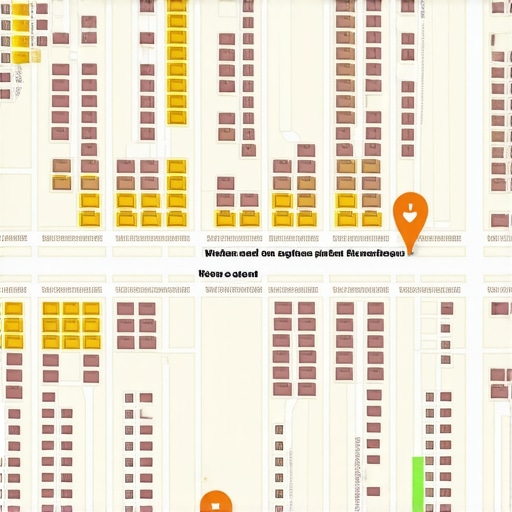
When we mapped the “heat” for our lighting client, we discovered a “cold zone” in a wealthy district where we should have been ranking. We weren’t ranking there because our profile lacked Relevance for that specific area. We hadn’t mentioned the neighborhood in our posts, we didn’t have reviews from residents in that zip code, and our website didn’t have localized landing pages. This is the invisible code that helps local homeowners find your lighting showroom fast: aligning your digital footprint with the physical locations of your customers.
To rank google business profile assets effectively, you must adapt your content strategy based on the “heat” you see in your analytics. If Suburb A is driving 40% of your business, your Google Business Profile posts should feature projects completed in Suburb A. You should mention local landmarks or specific architectural styles common in that neighborhood. This creates a feedback loop: Google sees that users in Suburb A find your profile relevant, which increases your prominence in that specific geographic area, further driving google maps lead generation.
This strategy moves you away from a “one-size-fits-all” approach. Instead of a generic “Best Lighting Store” title, you are building a profile that screams “The Premier Lighting Solution for [Specific Neighborhood] Homeowners.” This level of granularity is what separates the top 3 results from the rest of the pack.
Section 3: Advanced Tools for Local Dominance
While native Google insights are a great starting point, they are limited. They tell you where people *came from*, but they don’t tell you where you *aren’t showing up*. In 2026, manual tracking is no longer enough to maintain a competitive edge. To truly dominate, you need professional-grade local seo tools.
One of the biggest breakthroughs in our process was the implementation of a google maps rank tracker. Unlike a traditional SEO tool that gives you a single ranking for a city, a map rank tracker provides a grid-based view. It shows you exactly how you rank at every 500-meter interval across your service area. This is essential because your ranking can be #1 at your front door but drop to #10 just three blocks away.
By using SEO Viper Tools, we were able to see these “ranking gaps” in real-time. For our lighting client, we saw that we were dominating the north side of the city but were completely invisible to the south, despite the south side having a higher concentration of luxury home builds. This insight allowed us to pivot our google business profile optimization efforts. We started targeting the southern neighborhoods through localized gmb ranking service tactics, such as geo-tagged photos and neighborhood-specific service descriptions.
In the modern landscape, local seo software is the only way to visualize the “Proximity” pillar of the algorithm. If you aren’t looking at a grid, you’re flying blind. These local seo ranking tools allow you to track the impact of your optimizations week-over-week, ensuring that your efforts are actually expanding your “ranking bubble” into the areas where your customers live.
Section 4: Hyperlocal Optimization Tactics
Knowing where your customers are is half the battle; the other half is capturing them. This requires a google maps ranking service mindset applied to every aspect of your online presence. Once we identified our target zip codes, we implemented a hyperlocal optimization plan that focused on three key areas: City Pages, Geo-Specific Reviews, and Localized Posts.
- City Page SEO: We created dedicated landing pages on the client’s website for each high-performing suburb. These weren’t just “keyword-stuffed” pages. They included galleries of lighting installations in those specific neighborhoods and testimonials from local residents. This boosted our local seo ranking factors by proving relevance to both Google and the user.
- Geo-Specific Reviews: We trained the showroom staff to ask customers for reviews that mentioned their neighborhood. A review that says, “They did a great job on my kitchen lighting in Oak Creek,” is worth ten reviews that just say, “Great service.” This is a critical component of increase google business profile visibility.
- Google Business Profile Posts: We shifted from generic product promotions to localized updates. “New modern pendants arriving today!” became “Check out these modern pendants we just installed in a beautiful home in Westside Heights.” This strategy is detailed in our guide on how 4 local search signals filled my 2026 lighting showroom.
By implementing these hyperlocal tactics, we saw a 45% increase in direction requests from our “target” neighborhoods within six months. This wasn’t because we moved the store; it was because we moved the store’s digital presence to where the customers were already looking. This is the essence of modern gmb ranking service: being present in the right micro-moment.
Furthermore, don’t overlook the power of service area business seo if you offer installation. Even if you have a physical showroom, defining your service area in your Google Business Profile to match the high-intent zip codes found in your analytics can help Google understand your reach. This helps you rank higher on google maps by bridging the gap between your physical location and your customers’ homes.
Section 5: The 2026 Outlook, Staying Ahead of the Algorithm
As we look toward the future of local search, the algorithm is becoming increasingly sophisticated. Google is moving away from simple keyword matching and toward “real-world signals.” In 2026, local seo trends suggest that Google will prioritize businesses that demonstrate a genuine connection to their community. This means that your google business profile seo must be more than just technical; it must be experiential.
Google is now using AI to analyze the photos you upload to your profile. If you are a lighting store, Google’s “Vision AI” can identify the types of fixtures in your photos. If a user searches for “Art Deco Floor Lamp,” and you have clear, high-quality photos of Art Deco lamps in your profile, your chances of appearing in the local map pack seo skyrocket. This is why we recommend a consistent schedule of high-resolution, geo-tagged photo uploads as part of any google business profile optimization plan.
To rank higher on google maps in the coming years, you must also pay attention to “brand sentiment” across the web. It’s not just about the reviews on your profile; it’s about how your business is mentioned on local blogs, news sites, and social media. Google’s algorithm is looking for “Prominence,” and nothing says prominent like being the most-talked-about lighting expert in your specific region. We are seeing a shift where “real-world signals” – like how many people search for your brand name specifically – are becoming heavier local seo ranking factors than ever before.
Section 6: Conclusion, Audit and Dominate
The days of “set it and forget it” local marketing are over. If you want to grow your lighting showroom or home renovation business in 2026, you must become a student of your own map analytics. You have the data at your fingertips; you simply need the tools and the strategy to execute it.
Start by auditing your current performance. Look at your direction requests. Identify your “heat” and your “cold zones.” Use a professional google maps optimization service or toolset to see where your ranking gaps are. Once you know where your customers live, you can stop shouting at the whole city and start having meaningful, localized conversations with the people who are most likely to buy from you.
Don’t let your competitors claim the best neighborhoods simply because they were more diligent with their data. Take control of your local presence today. The roadmap to dominance is clear: Analyze, Optimize, and Outrank. For more insights on staying ahead of the curve, check out our latest report on unveiling the top local search signals for 2025-2026. The future of your showroom depends on your ability to be found exactly where your customers are looking.